Introduction
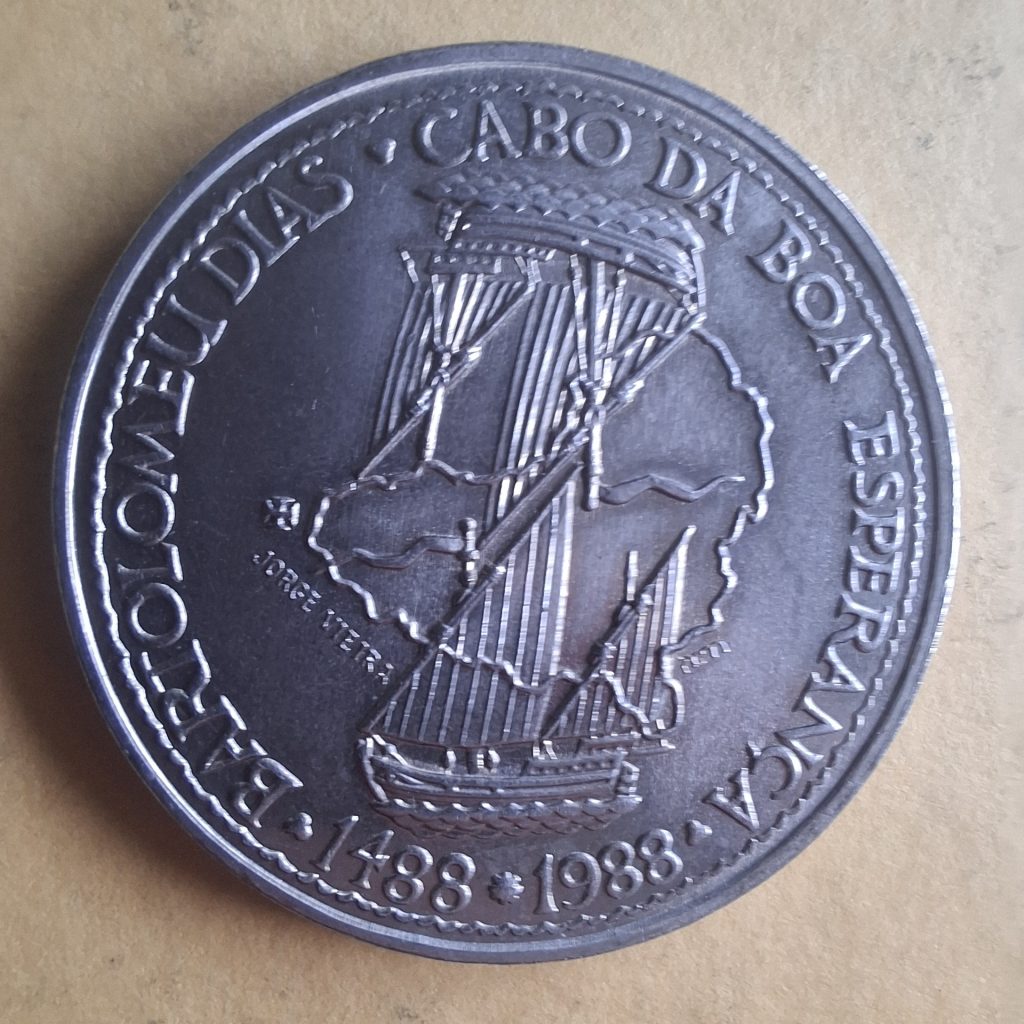
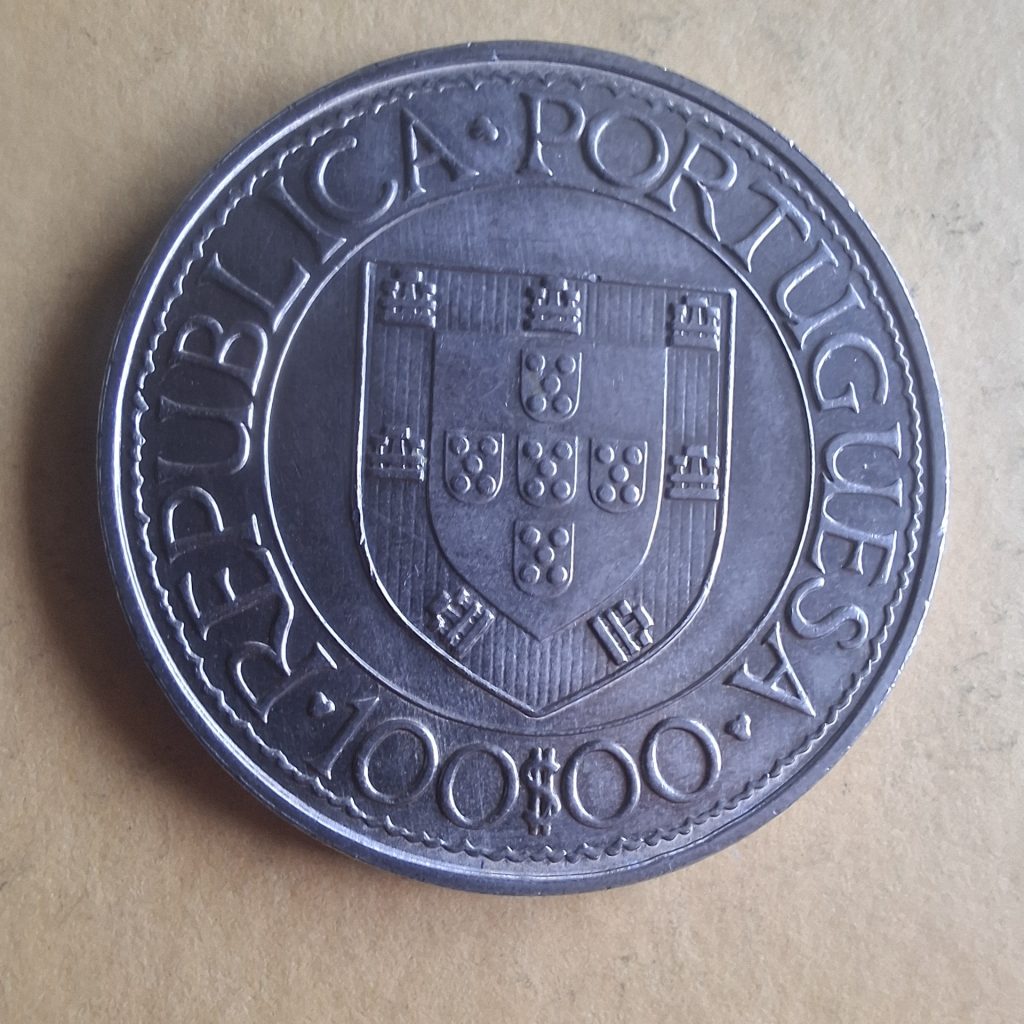
In 1988, Portugal issued a commemorative coin as part of the First Series of the Portuguese Discoveries, marking the 500th anniversary of Bartolomeu Dias’ voyage and his rounding of the Cape of Good Hope (1488–1988). The 100-escudo denomination was released in several versions — in base metal (cupronickel), as well as silver and gold editions intended for collectors. Today, it is of interest both to collectors of modern Portuguese coinage and to those focused on historical themes.
Description and Technical Characteristics
The exact specifications vary by version, but the most commonly referenced details are:
- Design / Legend: The inscriptions typically include “BARTOLOMEU DIAS,” “CABO DA BOA ESPERANÇA,” and the dates “1488–1988.” Designer: Jorge Vieira. Issuer: Imprensa Nacional – Casa da Moeda (INCM).
- Cupronickel (most common/commemorative issue): weight approx. 16.5–16.6 g, diameter approx. 33.5–34 mm, reeded edge. Issued for general commemorative circulation.
- Silver (collector / proof version): silver (.925) examples exist, also around 16.5 g and 34 mm, intended for non-circulating collector sets.
- Gold (special editions): recorded gold issues (approx. .917 fineness), around 24 g and 34 mm — very low mintage and exclusively for collectors.
Catalogs (KM, Alberto Gomes, Numista, Ucoin) list several variants (e.g., KM#642, with subtypes depending on metal and finish). Identifying the exact reference is important for classification and valuation.
Varieties and Mintages
Because the coin belongs to a commemorative series, multiple versions exist: cupronickel for general release, silver for proof/collector sets, and gold for premium editions. Mintages vary greatly — cupronickel versions were produced in higher quantities, while silver and especially gold editions have significantly lower mintages, increasing their numismatic appeal.
Art, Designer, and Historical Context
- Theme: The coin celebrates the 500th anniversary of Bartolomeu Dias’ voyage, during which he rounded the Cape of Good Hope in 1488, opening the sea route toward the Indian Ocean — a major milestone of the Portuguese Discoveries.
- Designer: The motif is attributed to Jorge Vieira, with production by the INCM in Lisbon. The design often combines Dias’ name and imagery with cartographic elements and caravels.
Condition and Grading
As with any modern coin, condition has a major impact on value:
- UNC / Proof / FDC: Proof and uncirculated examples are worth significantly more.
- Handling marks, scratches, or cleaning lower the value.
For silver and gold issues, original packaging and certificates are important for authentication and resale value.
Numismatic Value (Typical Market Ranges)
Market value depends on metal, condition, rarity, and current demand:
- Cupronickel (common version): Typically modest value — from just a few euros up to a few dozen euros, depending on condition and presentation.
- Silver (collector / proof): Usually valued higher — often tens to low hundreds of euros, especially if boxed and certified.
- Gold (special editions): These command the highest prices due to intrinsic metal value and low mintages — commonly hundreds to several thousand euros, depending on condition, documentation, and market demand.
Note: Prices fluctuate with market conditions, demand, and availability. Recent sales, auctions, and dealer listings should be consulted for the most accurate current valuation.
How to Evaluate and Sell the Coin
- Identify the exact variety (metal, catalog number, finish).
- Assess the condition (circulated, UNC, proof).
- Check authenticity — especially for silver and gold versions; original boxes and certificates are valuable.
- Where to buy/sell: numismatic dealers, auction houses, and reputable online marketplaces (eBay, specialized numismatic sites). For high-value gold pieces, professional evaluation is recommended.
Conclusion
The 100 Escudos “Bartolomeu Dias / Cape of Good Hope” (1988) is a notable commemorative issue from the late Escudo period, ranging from accessible cupronickel pieces to scarce and valuable silver and gold editions. Its numismatic appeal depends primarily on metal type, condition, and completeness of original packaging. While the cupronickel version is widely available and affordable, the silver and especially gold editions command significantly higher value and deserve careful authentication.