Design and Symbolism
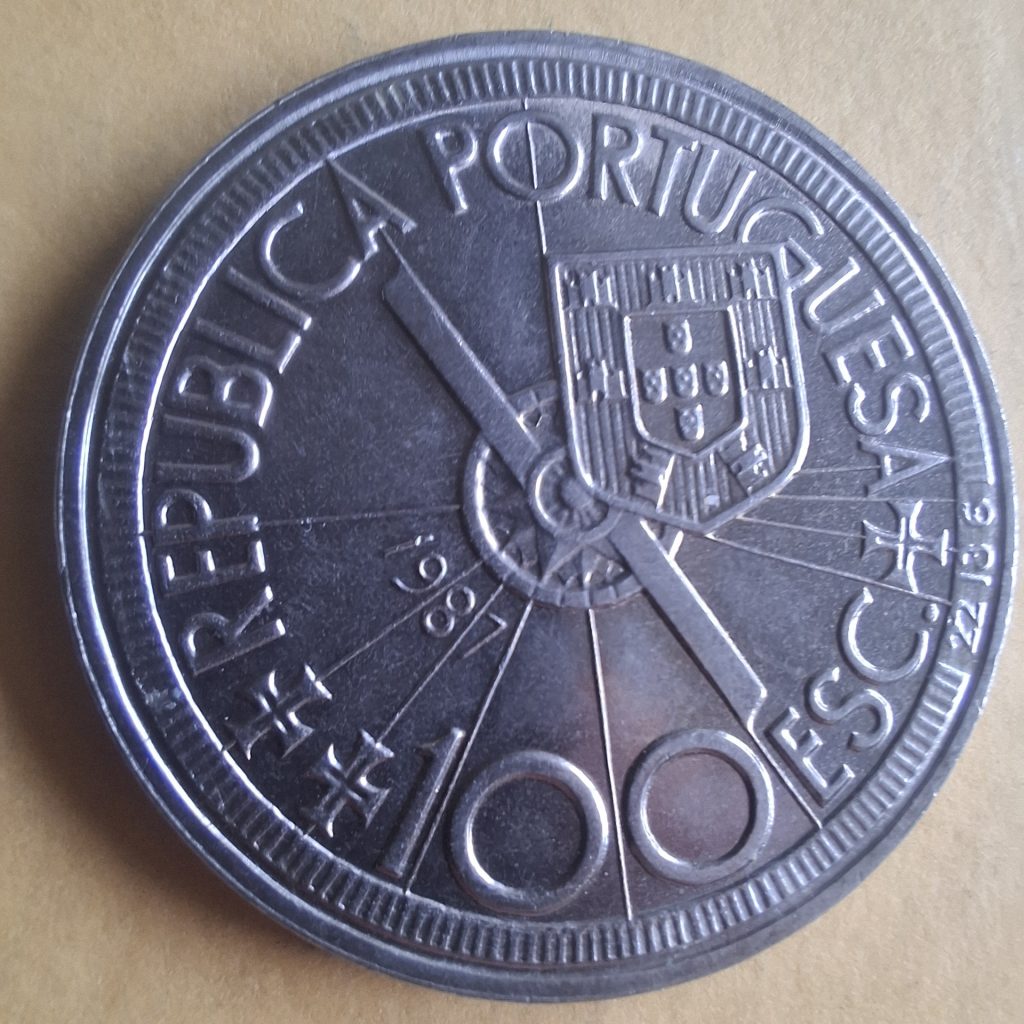
- Obverse: features the Portuguese Coat of Arms and the inscription “REPUBLICA PORTUGUESA,” along with the face value “100 ESCUDOS.” The central elements resemble a compass or navigational motif, evoking the Age of Discoveries.
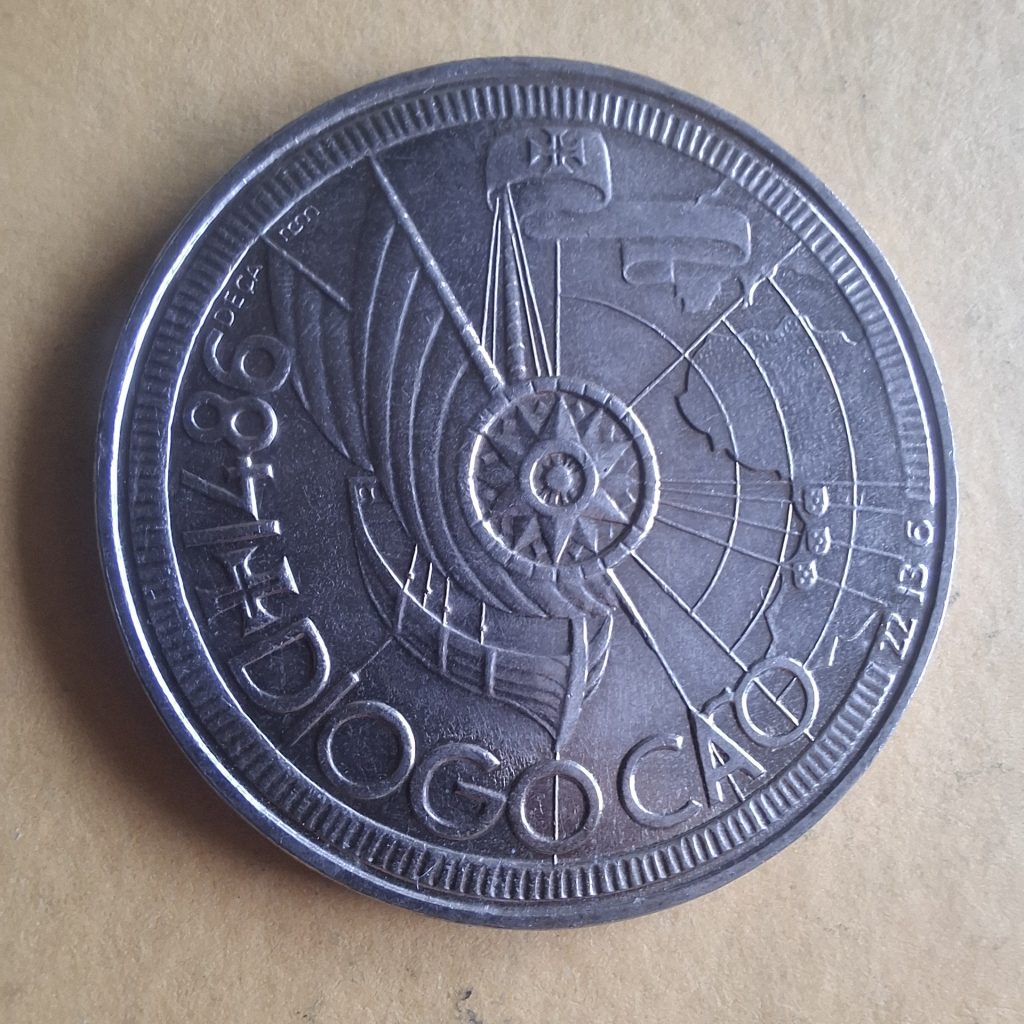
- Reverse: shows the name Diogo Cão, the symbolic date “1486,” and imagery related to navigation routes — a modern composition inspired by a stylized compass rose and maritime elements, recalling the voyages of Portuguese explorers.
Technical Specifications (most common variants)
There are three main variants referenced in collector catalogs and markets:
- Cupronickel (most common)
- Metal: Cupronickel
- Weight: ≈ 16.5 g
- Diameter: ≈ 33.5–34 mm
- Edge: Reeded
- Catalog reference: KM#641
- Silver (collector edition)
- Composition: 92.5% silver (sterling silver)
- Weight: ≈ 16.5 g
- Diameter: 34 mm
- Catalog reference: KM#641a
- Gold (proof / collector edition)
- Composition: 91.6% gold (22K listed in some sources)
- Weight: ≈ 24 g (approx. 22 g fine gold depending on edition)
- Diameter: 34 mm
- Proof/limited release, much higher market value
Note: Exact details (especially gold fine weight) may vary slightly depending on the specific proof edition. It’s best to check the original certificate when buying or selling.
Designer and Mint
- The engraver associated with this series is Paulo Guilherme d’Eça Leal, and the coin was struck by the Imprensa Nacional – Casa da Moeda (Portuguese Mint, Lisbon).
Mintage and Circulation
- The cupronickel version is the most common. Sources indicate a relatively high mintage (around 1,000,000 units for the standard issue), which explains its wide availability on the collectors’ market.
Numismatic Value — Practical Guidance
Market value varies according to material, condition, and presence of original packaging/certificates (in the case of proofs). Approximate ranges observed in shops and listings:
- Cupronickel (circulated or worn): typically a few euros, often ~€2–€10 depending on condition. Because the issue is common, values remain modest.
- Cupronickel (UNC / uncirculated): may reach €10–€30 when in excellent, pristine condition.
- Silver edition: higher value than cupronickel; price depends on rarity, condition, and demand — usually above the intrinsic metal value.
- Gold / Proof editions: significantly more valuable, often hundreds to over a thousand euros depending on the market, due to precious metal content and limited proof status.
Key point: The standard cupronickel coin is collectible but not rare; its value is mostly historical and thematic rather than financial. Proof editions (especially gold) are the ones with strong investment value.
How to Evaluate / Buy / Sell
- Condition matters greatly: use the standard grading scale (circulated, VF, XF, AU, UNC, FDC). Even small marks reduce value on base-metal coins.
- Original packaging/certificates increase the value of silver and gold editions.
- Minting errors (double strikes, off-center, etc.) may increase value — have them checked by a specialist if suspected.
- Catalog references (e.g., KM numbers) are helpful to confirm the exact variant before pricing or trading.
Conclusion — Who Is This Coin For?
- Thematic collectors of Portuguese Discoveries will appreciate this coin as part of the series; the cupronickel version is affordable and easy to acquire.
- Precious metal investors may prefer the gold or silver proof editions, which combine metal value with collectible status.
- Private sellers should expect modest prices for the standard version, unless the piece is in outstanding uncirculated condition or a precious-metal edition.