Commemoration: IV Series “Portuguese Discoveries” — Arrival in Japan / First contacts in Tanegashima (1543–1993)
Historical Context
The coin commemorates the landing of the first Portuguese in the Japanese island of Tanegashima (1543), an event that marked European contact with Japan and the introduction of firearms and naval techniques during the 16th century. It was chosen as part of the IV series dedicated to the Portuguese Discoveries.
Obverse and Reverse Description
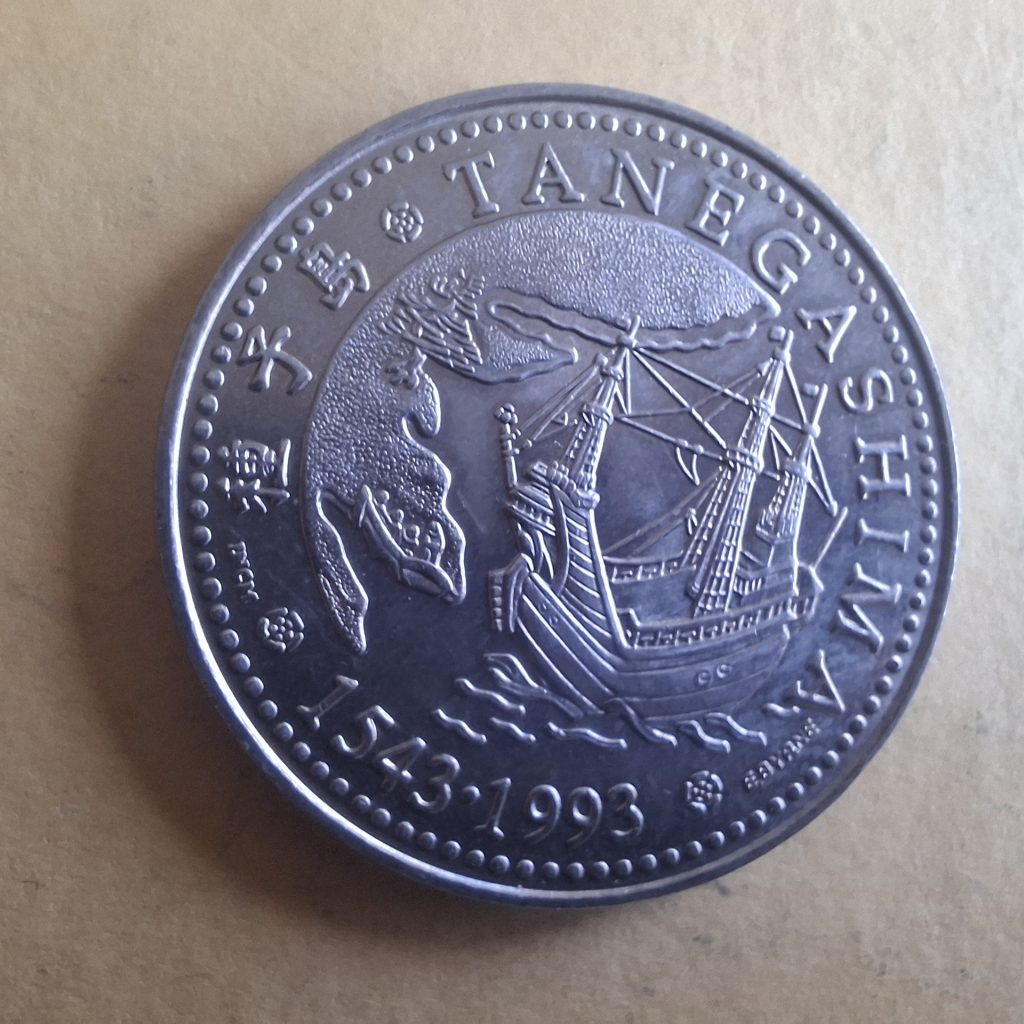
- Reverse (commemorative design): shows a ship (caravel) in the foreground with the inscription “TANEGASHIMA” and the double date 1543·1993, marking the 450th anniversary of the contact. Decorative motifs referencing Japan are also included.
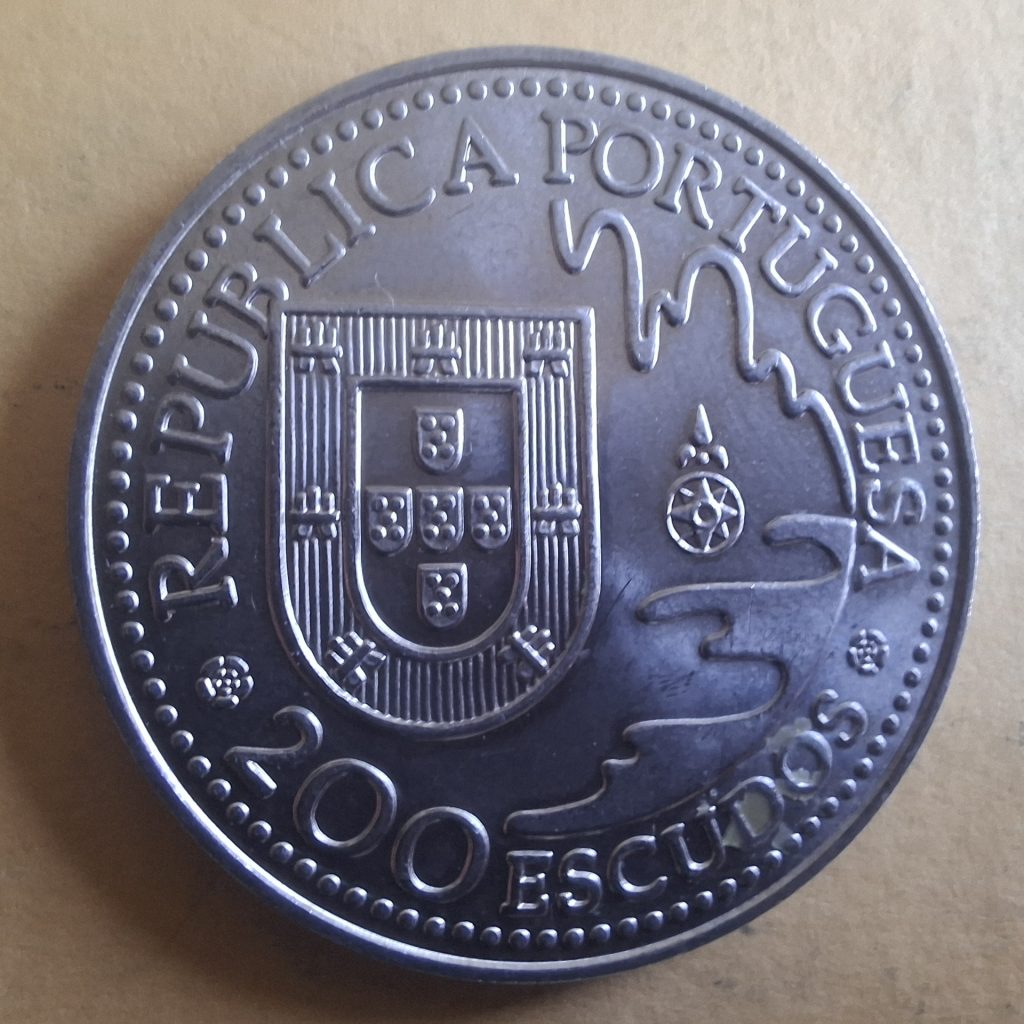
- Obverse (national side): displays the stylized Portuguese coat of arms, the inscription “REPUBLICA PORTUGUESA” and the denomination 200 ESCUDOS.
Technical Specifications (most common — cupro-nickel)
- Year: 1993
- Face Value: 200 Escudos
- Composition (common version): cupro-nickel — standard circulation/collector coin
- Weight: approximately 21.0–21.1 g (cupro-nickel)
- Diameter: 36 mm
- Finish: normally UNC (uncirculated) for collector versions; silver and proof versions also exist
- Catalog Reference: Standard Catalog KM# 665 (variants: cupro-nickel, silver, gold, proof editions)
Rare and Special Variants
- Silver (925/1000) and gold/proof versions: In addition to the common cupro-nickel coin, the Portuguese Mint issued limited silver and gold collector editions. Some proof sets included both silver and gold coins, with extremely limited mintages, making them significantly more valuable.
Mintage
- The cupro-nickel version had a relatively high mintage, around 1,000,000 coins. Silver and gold/proof versions were much more limited, often issued in only a few hundred sets.
Numismatic Value — Practical Guidelines
Most common cupro-nickel 200 Escudos Tanegashima coins are widely available and have low to moderate market value. Silver, proof, or gold coins, as well as coins in exceptional condition, are the ones that carry significant value.
Price Ranges (approximate, based on recent listings and auction data)
- Cupro-nickel (common, UNC/commercial): typically €1–€6
- Cupro-nickel sets or lots: slightly higher, €6–€20 for multiple coins
- Silver (proof or 925‰): coins can reach €200–€300 depending on condition, especially when certified/protected
- Limited collector sets (silver + gold/proof): prices can reach thousands of euros due to extremely limited editions
Note: Prices vary with condition, certification, and market demand. Professional grading (NGC/PCGS) increases market confidence for higher-value coins.
How to Identify Variants and Verify Authenticity
- Material and weight: cupro-nickel ~21 g; silver ~26.5 g (proof silver coins vary slightly).
- Edge and finish: proof coins have mirrored fields and frosted reliefs; cupro-nickel coins have a standard finish.
- Packaging and certificate: silver/gold coins usually come in a case with a certificate.
- Catalog reference: KM#665 and Portuguese coin catalogs confirm variants.
Tips for Collectors and Sellers
- Beginner collectors: start with common cupro-nickel coins; they are inexpensive and easy to acquire. Keep the best UNC examples for your collection.
- Sellers: provide clear photos (obverse/reverse), specify weight, diameter, condition (UNC, SOB, etc.), and note any packaging/certification.
- Investors: common cupro-nickel coins are not an investment; focus on precious metal variants, limited mintage, and certified proof coins.
Conclusion
The 200 Escudos Tanegashima (1993) is historically and visually interesting. Common cupro-nickel coins are widely available and ideal for thematic collections, while silver/proof and gold variants in exceptional condition carry the real numismatic value.