Portugal — 6th Series of the Discoveries (On the Spice Route)
Overview
The commemorative 200 escudos coin from 1995, known as “Australia (1522–1525)”, is part of the 6th Series of Portuguese Discoveries — an issue dedicated to the routes and contact points that marked the Age of Discoveries. It is catalogued as KM #684 in standard numismatic references.
Design and Symbolism
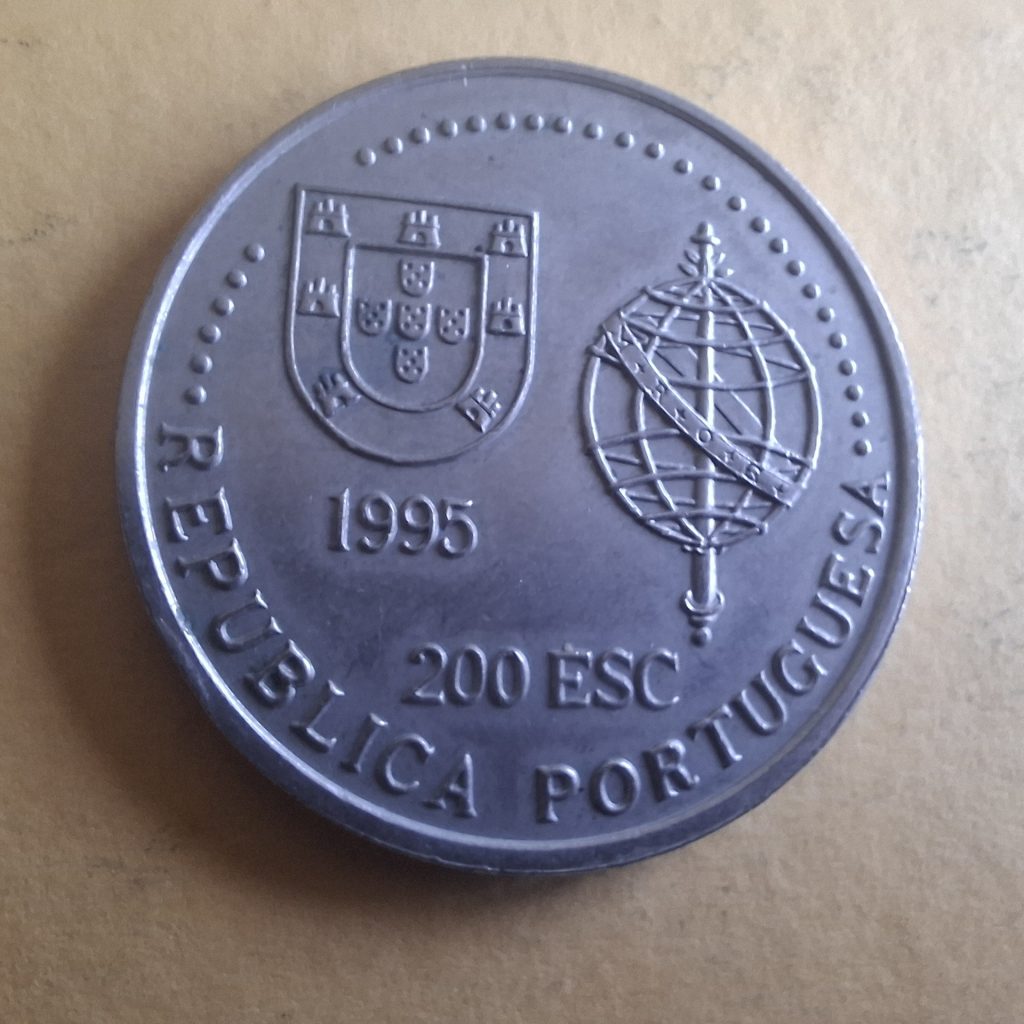
- Obverse (front): features the national coat of arms on the left and, on the right, an armillary sphere (a symbol associated with Portuguese navigations), with the legend «REPUBLICA PORTUGUESA», the date 1995, and the denomination 200 ESC.
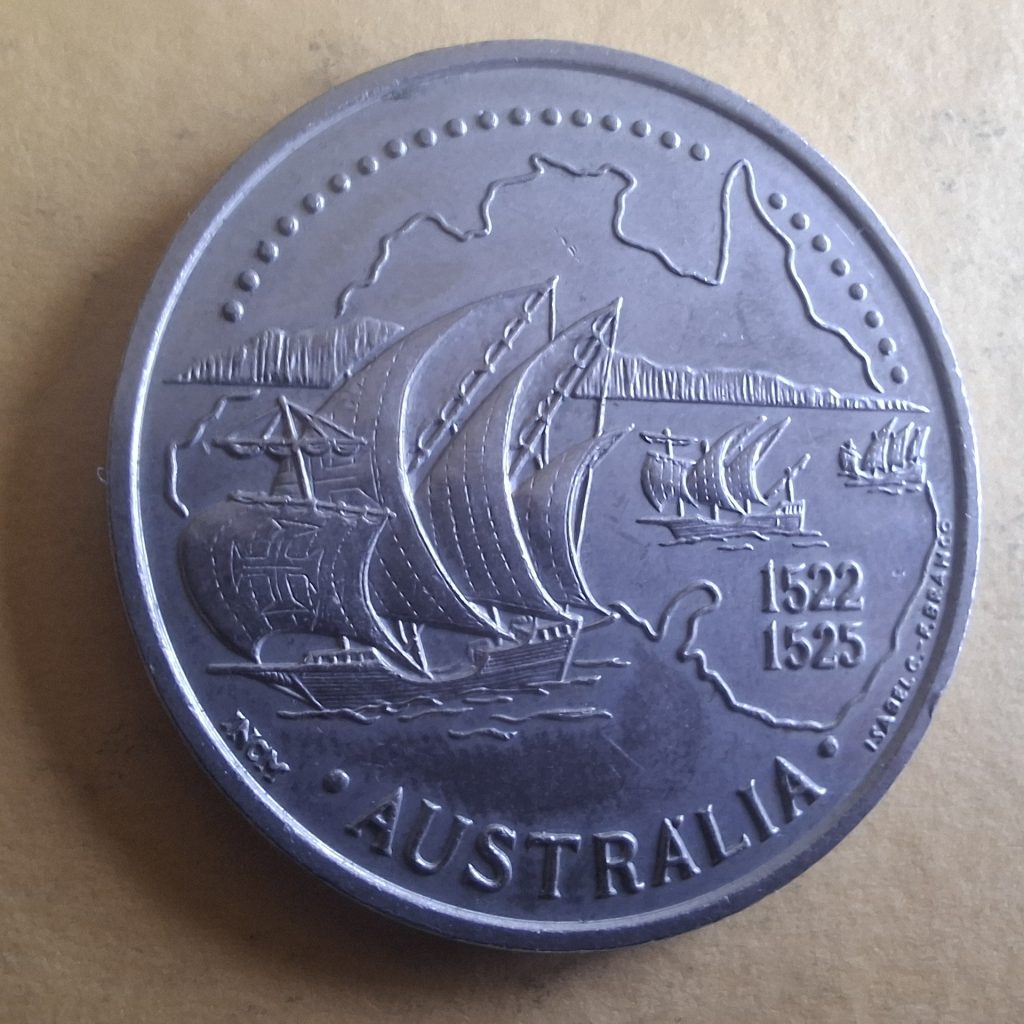
- Reverse (back): depicts sailing ships over the outline of the Australian continent, the dates 1522 / 1525, and the legend AUSTRALIA, referring to Portuguese voyages and possible contacts in the region during the early 16th century. The motif integrates the iconography of the Discoveries series: ships, maps, and routes.
Technical Specifications
- Material: cupro-nickel (circulating version)
- Diameter: 36.0 mm
- Weight: ~21.0–21.2 g
- Thickness: ~3 mm
- Catalog / Reference: KM #684
Note: besides the circulating cupro-nickel version, there are non-circulating/proof versions in silver (.925) and special editions (gold/platinum) intended for collectors — these have distinct features, limited mintage, and much higher values.
Mintage / Issue
The reported mintage for the common cupro-nickel version is 750,000 pieces — a relatively high number for a commemorative coin, making it common in the collector market.
Numismatic Value (How to Assess)
Common Version (cupro-nickel)
- Circulated coins (worn): typical market value ranges €1 to €5, depending on condition. In private sales, coins often sell for €1–€3.
- Uncirculated / superb condition coins: can fetch higher prices — typically €3 to €15, depending on seller and demand; reference catalogs indicate modest prices (a few euros) for common pieces.
Silver / Gold / Proof Versions
- Silver (.925, 26.5 g): lower mintage, significantly higher value than cupro-nickel; prices vary with finish (proof vs. standard) and condition, usually ranging from tens of euros for common silver coins to higher for proofs.
- Gold / auction editions: gold or special lots have been sold at auctions for prices reaching thousands of euros, making them attractive for specialized collectors and precious metal investors.
Important: market prices fluctuate quickly (supply, demand, coin condition, and metal value). The above references are based on listings, online stores, and documented sales; for exact valuation, check recent auction results and reputable numismatic dealers.
Tips for Collectors
- Condition is key: avoid cleaning the coin (cleaning damages patina and reduces value).
- Verify the variant: confirm if it is the common version (cupro-nickel) or a silver/gold/proof version — this greatly affects value.
- Check references: use catalogs (KM, Numista, Alberto Gomes, Reinaldo Silva) and compare recent listings for realistic pricing.
- Buy from trusted sources: prefer reputable dealers or sellers; request high-quality photos and, if possible, certificates for special editions.
Conclusion
The 200 escudos — Australia (1995) coin is representative of the commemorative Discoveries series: strong thematic design, relatively high production (~750,000 pieces for the common version), and wide availability for casual collectors. The cupro-nickel version is affordable and easy to find; silver and gold variants are rarer and of greater numismatic (and financial) interest. The key factors for valuation are the coin’s condition and metal variant.