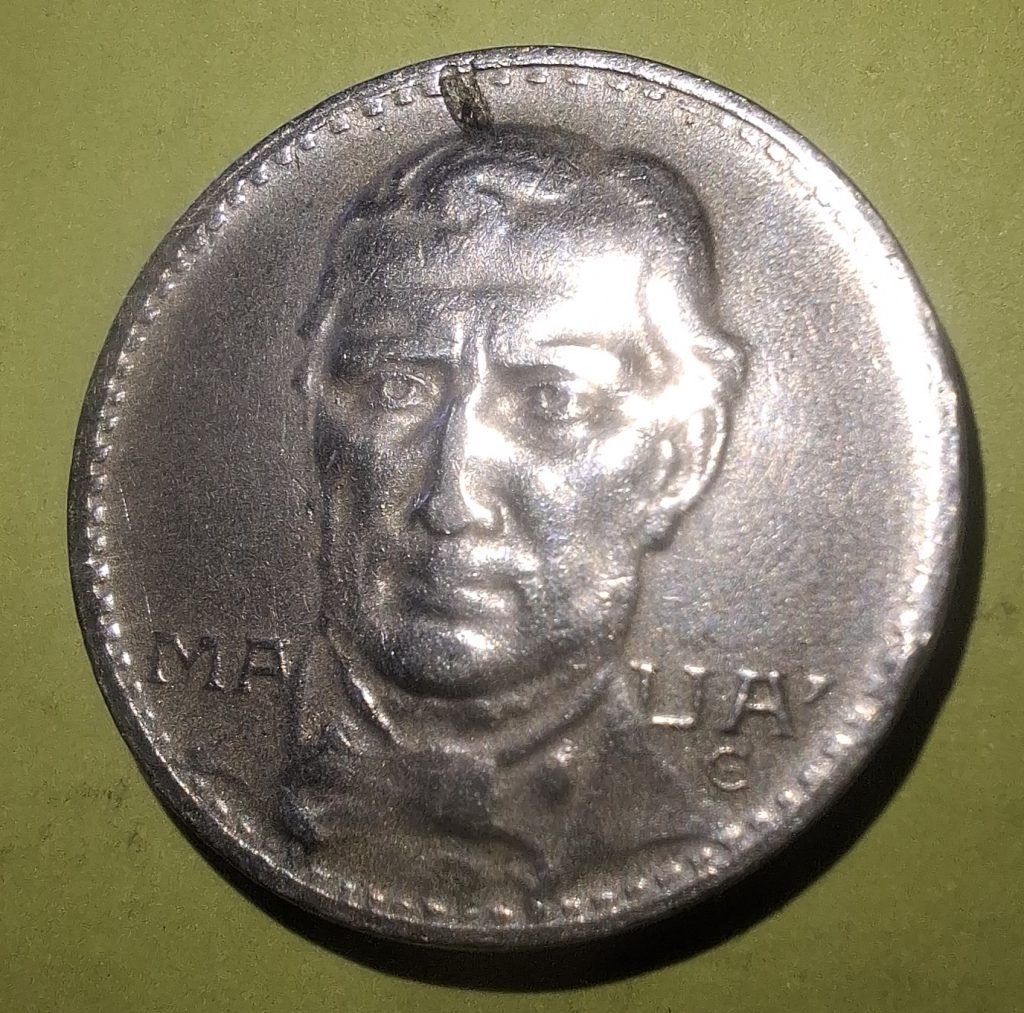
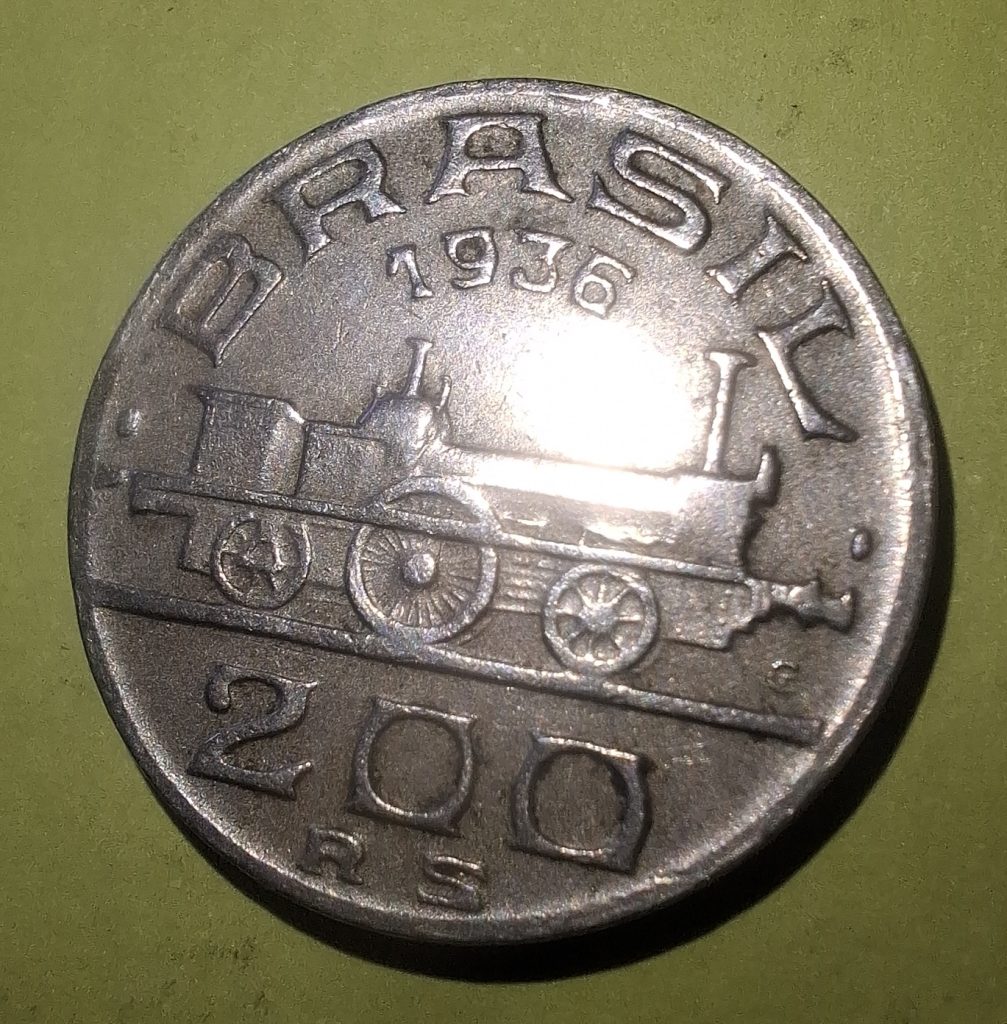
The 200 réis coin issued by Brazil in 1936 is part of the series known as Brasileiros Ilustres (“Illustrious Brazilians”), featuring the effigy of Irineu Evangelista de Souza — Viscount of Mauá on the obverse and a steam locomotive on the reverse. It is a popular piece among collectors of réis coins from the Republic era (Vargas period), appreciated both for its design and historical significance.
Specifications
- Country: Brazil
- Year: 1936
- Face Value: 200 réis
- Metal: Cupronickel
- Diameter: 23 mm
- Weight: ≈ 6 g
- Edge: Smooth
- Designers/Engravers: Attributed to Calmon Barreto de Sá Carvalho and Leopoldo Campos for the reliefs on the coin.
- Catalog References: KM#537 (Krause catalog), Amato V-143 (variants).
Design Details
- Obverse: Frontal portrait of Irineu Evangelista de Souza (Viscount of Mauá), with inscriptions beside the bust and engraver marks in the lower field.
- Reverse: Stylized steam locomotive above two lines, the date 1936 above the locomotive, and the denomination 200 / Rs at the bottom; “BRASIL” is inscribed at the top. The overall style reflects the geometric Art Deco aesthetic common in the 1920s–1930s.
Mintage and Rarity
Catalog sources indicate a relatively high mintage for 1936 — approximately 2,256,000 pieces. Variants from 1937 and 1938 have slightly higher mintages. This makes the 1936 coin common in circulated condition and not particularly rare compared to commemorative or low-mintage issues.
Numismatic Value (Factors and Price Range)
The market value of a coin depends heavily on condition (grade), presence of scratches, cleaning, luster, and whether it is a proof or error coin. General price ranges:
- Circulated condition (VF/F, noticeable wear): Usually low value — often just a few USD/BRL.
- High-grade circulated to almost uncirculated (MBC to SOB / XF to AU): Moderate prices in specialized Brazilian coin shops — sometimes tens of BRL.
- Uncirculated / Gem (UNC, no signs of handling): More desirable and can fetch a premium. However, because of the relatively high mintage, even UNC examples are not extremely expensive unless rare variants or errors exist. Typical market range today: a few USD/BRL (circulated) up to tens/hundreds in exceptional conditions.
Note: Marketplace listings (e.g., eBay, Brazilian shops) show that circulated coins sell at modest prices. The coin is more valued for historical interest and series completion than high monetary worth.
Collector Tips
- Condition matters more than rarity: Avoid coins with aggressive cleaning or solvent damage; original patina adds value.
- Check for variations and mint marks: Look for engraver marks, relief differences, or errors (double strike, die cracks), which can increase value.
- Compare real sale prices: Listings can be inflated; check auction results or actual sale prices to gauge true market value.
Conclusion
The 1936 200 réis coin is a representative coin of 1930s Brazil: well-designed (Viscount of Mauá and steam locomotive), with clear specifications (cupronickel, 23 mm, ~6 g), and a relatively high mintage making it common. Its numismatic value is modest in circulated condition but rises with higher grade or special variants/errors. It is recommended for collectors aiming to complete series of réis coins or thematic collections of illustrious Brazilians and industrial transport.