Historical Context
The 1933 5 francs coin was issued by the French Third Republic, a period that lasted from 1870 until the beginning of World War II. The “franc” had been France’s official currency since the late 18th century, and mid‑denomination coins circulated widely in daily trade before the euro was adopted in 1999 (and physically withdrawn in 2002).
Technical Specifications
The 1933 5 francs coins exist in at least two main recognized variants in numismatic catalogs:
1. Standard Variant (KM#892)
- Issuer: French Republic
- Year: 1933 (part of a series minted until 1939)
- Composition: Nickel
- Weight: ~12 g
- Diameter: 31 mm
- Thickness: ~2.1 mm
- Edge: Plain
- Minting technique: Milled
- Demonetized: September 22, 1939
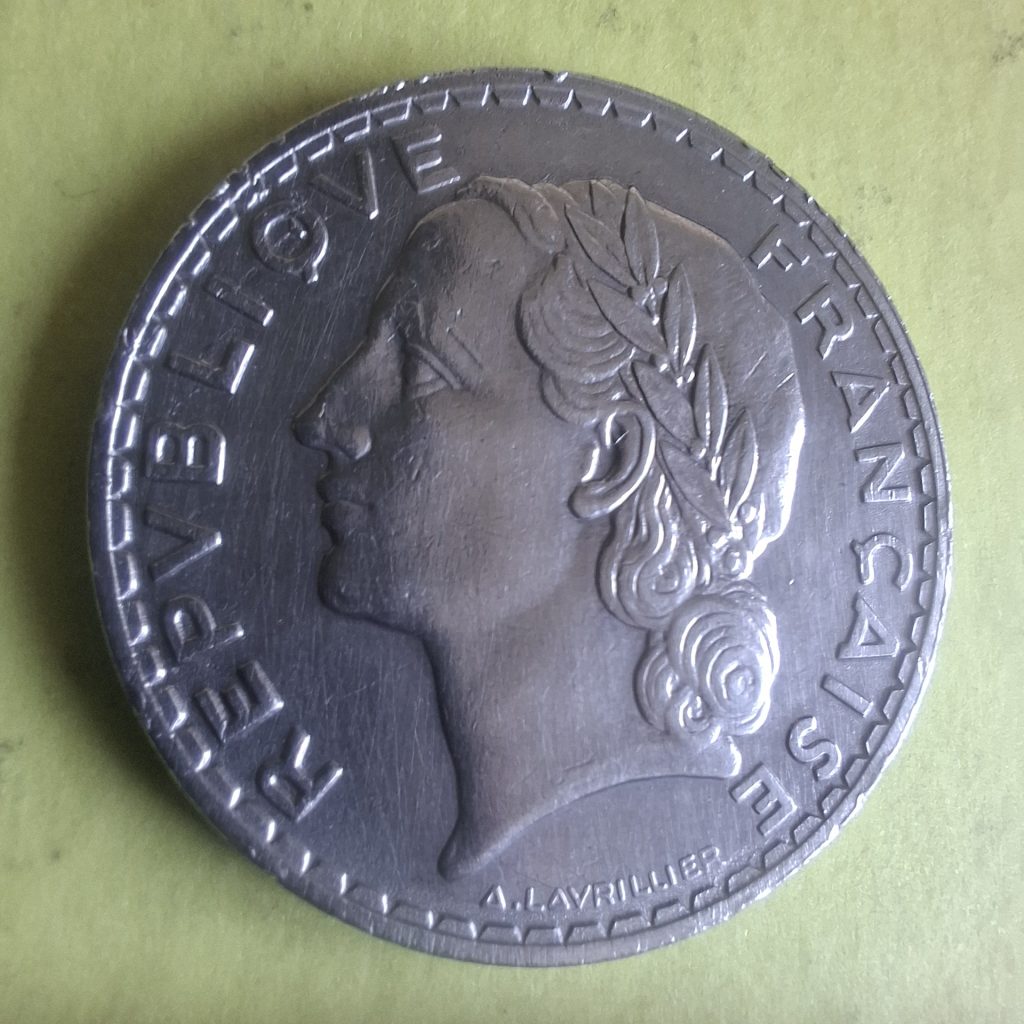
- Engraver: André‑Henri Lavrillier (obverse with laureate head)
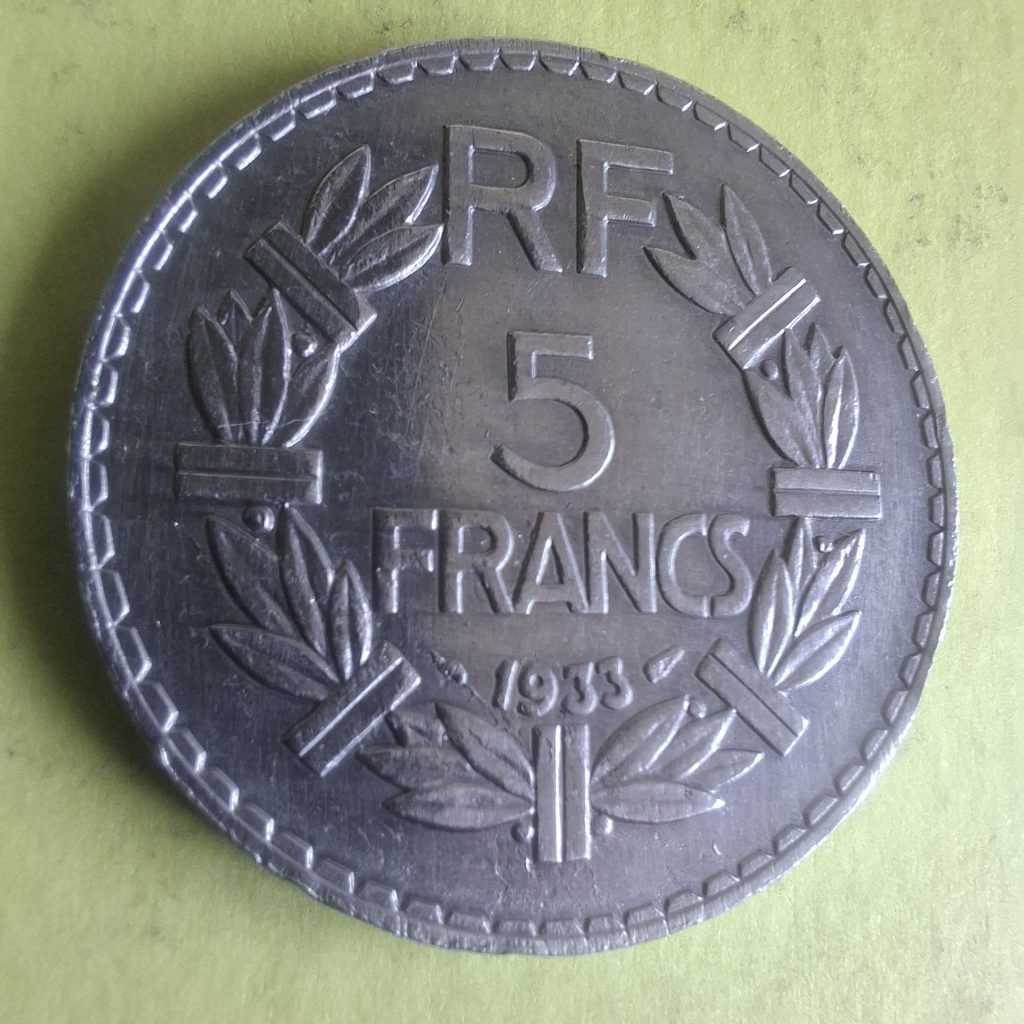
- Reverse Description: denomination “5 FRANCS” and date inside a split floral wreath
2. “Bazor” or Smaller Variant (KM#887)
Some references mention a 5 francs version with:
- Lower weight: ~6 g
- Smaller diameter: ~23.7 mm
- Reeded edge
- High mintage: over 100 million in 1933
The reason for these two variants may be due to series differences or cataloging inconsistencies; most collections consider the 12 g type as representative of the Lavrillier series.
Design and Symbolism
On the obverse of the most documented version, an allegorical personification of the Republic is depicted with a laureate bust facing left, surrounded by the legend REPUBLIQUE FRANÇAISE and the engraver’s name. The reverse features a classical motif with the denomination and date surrounded by decorative elements. The design reflects the artistic style of early 20th-century France, combining functionality with aesthetic appeal.
Circulation
During the 1930s, France faced economic and financial challenges, and monetary reforms were frequent. Nickel coins like this circulated widely in daily transactions until they were withdrawn from circulation at the end of the decade, just before World War II and the introduction of emergency monetary standards.
Numismatic Value
The market value of a collectible coin depends heavily on condition, rarity, demand, and provenance. For the 1933 5 francs coin:
Indicative Prices
Values vary according to preservation:
- Very Good (VG / G): ~€1.15 – €1.80
- Fine (F / VF): ~€1.30 – €2.50
- Extremely Fine / Uncirculated (XF / UNC): ~€2.40 – €3.70 or slightly more for mint-condition specimens
In U.S. dollars, typical estimates range from $1.80 to $3.20 depending on condition.
Rarity
Although many coins were minted—especially the smaller variant (over 100 million)—these coins are generally considered “uncommon” in the collector market: accessible yet not as abundant as modern or lower-denomination coins.
Conclusion
The 1933 5 francs coin is an interesting piece of French monetary history from the interwar period. For collectors, its primary value lies in historical context and status as a classic circulation coin, rather than intrinsic metal value. Well-preserved examples are sought after by those completing Third Republic franc series, making it an affordable entry point into numismatics.